Todd Frank Dupont, Inventive Computational and Applied Mathematician, 1942–2026

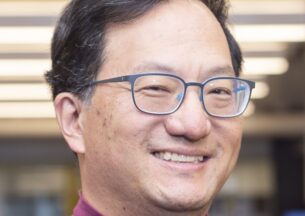
Todd Frank Dupont, a creative computational and applied mathematician who made breakthroughs in academia and industry, died on September 29. Dupont, a Professor Emeritus in Computer Science, Mathematics, and the James Franck Institute, was 84.
Throughout his professional life, Dupont was a tenacious problem solver, interested both in mathematics and its practical applications. The main area of his research was the mathematical foundations of the finite element method, the most widely used method for solving partial differential equations in engineering and science.
“He had seminal papers at the very beginning of the subject, and this continued regularly to just before his death,” said longtime colleague Ridgway Scott, Louis Block Professor Emeritus in Computer Science and Mathematics. “His work in this field was pervasive, yet often not well known to many in the field. I often tell young people in the field, if you think you have a breakthrough result, first check to see if Todd Dupont already did this.”
“Todd was a marvelous colleague. I knew him best in his capacity as a leader and a developer of leaders,” said Stuart Kurtz, George and Elizabeth Yovovich Professor Emeritus in Computer Science. “He was patient, wise, and ethical. He was always his own best self, and he inspired those around him to be their best selves.”
‘A Rare Professor’
Born on August 29, 1942, in Houston, Texas, Dupont earned his bachelor’s degree in mathematics from Rice University, where he continued his graduate studies, earning his Ph.D. in mathematics in 1968. He then joined the University of Chicago as an instructor, becoming an assistant professor of mathematics in 1969.
That same year, Dupont and Henry Rachford established Dupont-Rachford Engineering Mathematics, or DREM. The company developed computer models to simulate oil and natural gas flow through pipelines. Their work led to commercial tools for pipeline simulation, operator training, leak detection, and predicting pipeline behavior that were used in the industry for decades. Nearly fifty years later, Dupont still contributed new ideas to improve the accuracy and efficiency of pipeline models used today.
Dupont’s curiosity extended far beyond pipelines. At the University of Chicago, where he rose to the rank of full professor in 1975, he collaborated with mathematicians, computer scientists, and physicists on problems involving fluid dynamics, the breakup of droplets, sonoluminescence, and even the familiar ring left behind when a drop of coffee dries. That everyday observation became the subject of influential research explaining what became known as the “coffee-ring effect,” leading to Dupont’s two most highly cited papers.
“Todd delighted in talking about real laboratory phenomena — and dear to my heart, he always wanted to see the movies,” said Sid Nagel, Stein-Freiler Distinguished Service Professor in Physics, the James Franck Institute (JFI), and the Enrico Fermi Institute, and Dupont’s collaborator on the coffee stain problem. “There were so many times that we had reached a roadblock or had a puzzle in some experiment, and we needed a reality check and then some good advice about what physics was underlying our findings. We always left feeling lighter because we had received the wisdom of a true expert. More important, we felt a jolt of his contagious enthusiasm. Todd really was the sparkplug for initiating so much of the fluids work here in the JFI.”
Dupont also served on the University’s Committee of the Council and taught and mentored generations of students. He was especially proud of his role in helping to build the Department of Computer Science, which he joined as a professor in 1985. Dupont served as the chair of Computer Science twice, from 1994 to 1997, and again from 2012 through 2016.
“Todd helped start the renaissance in computer science at the University. During his second tenure as chair, he hired top faculty members, such as Fred Chong (Quantum Software and Systems) and recent winner of the Mark Weisner Award Shan Lu (Reliable Systems), and thereby laid the foundation for the tremendous growth that occurred under Mike Franklin’s subsequent leadership,” said friend and longtime colleague Anne Rogers, Associate Professor of Computer Science. “Todd was a man of great integrity and warmth. Those traits combined with his high standards for scholarship made him an excellent leader and a much sought-after counselor.”
“Todd was a true unicorn at the University during the 1990s and 2000s: a superb applied mathematician with a terrific understanding of computational science on modern massively-parallel computers, who enjoyed interacting with physicists and astrophysicists and always proved to be a wonderful collaborator,” said Robert Rosner, William E. Wrather Distinguished Service Professor in Astronomy & Astrophysics and Physics, the Enrico Fermi Institute, and Harris School of Public Policy.
“He was also thoughtful and kind in his personal interactions, whether with fellow faculty or with students and postdoctoral fellows,” continued Rosner, “a rare professor who was universally liked and appreciated. In my own case, I hugely benefited from my scientific collaborations with Todd, as well as from his sage advice to me regarding administrative matters in our computational physics center (the Flash Center) at UChicago.”
Dupont retired from the University in 2023.
Family First

The same curiosity and problem-solving instinct Dupont carried through his career were part of his life at home. He loved to tinker, fix things, and make them work a little better. When he was younger, he enjoyed biking; in later years, walking and daily exercise became favorite pastimes.
More than anything, Dupont loved spending time with his family, especially at his place in Indiana, where the family gathered and simply enjoyed being together. For all that Dupont accomplished, family remained at the center of his life.
Dupont was preceded in death by his wife, Judy. He is survived by his daughter, Michelle, and her husband, Peter; his son, Todd K.; his longtime partner and best friend, Terese; and his grandchildren, Christina and her husband, Orion, and their children, Shea and Jamie; Matthew and his partner, Natasha; and Alyssa. He is also survived by his sister, Nanette; his sisters-in-law, Sandy and Susan, and his brother-in-law, Ward.
Donations may be made in Dupont’s memory to the National Organization for Rare Disorders (NORD).
Adapted from an obituary written by Dupont’s family.